
The Line Never Asked for Papers.
For as long as I’ve been in this industry, I’ve made it a point not to mix politics and business. Not because people don’t have opinions, but because restaurants have never survived on agreement. They’ve survived on people showing up, doing the work, and finding a way to function together, even when they don’t see eye to eye.
I’ve worked alongside people from every background imaginable. Democrats, Republicans, liberals, conservatives, and plenty of folks who didn’t care enough to label themselves. Different accents on the line. Different beliefs at family meal. People here legally and people who weren’t. What mattered wasn’t who you voted for or where you came from. What mattered was whether you could be counted on when it got busy.
Kitchens and dining rooms have always been places where differences existed without needing to be debated to death. You showed up, you did the work, and you respected the people beside you. That was the agreement.
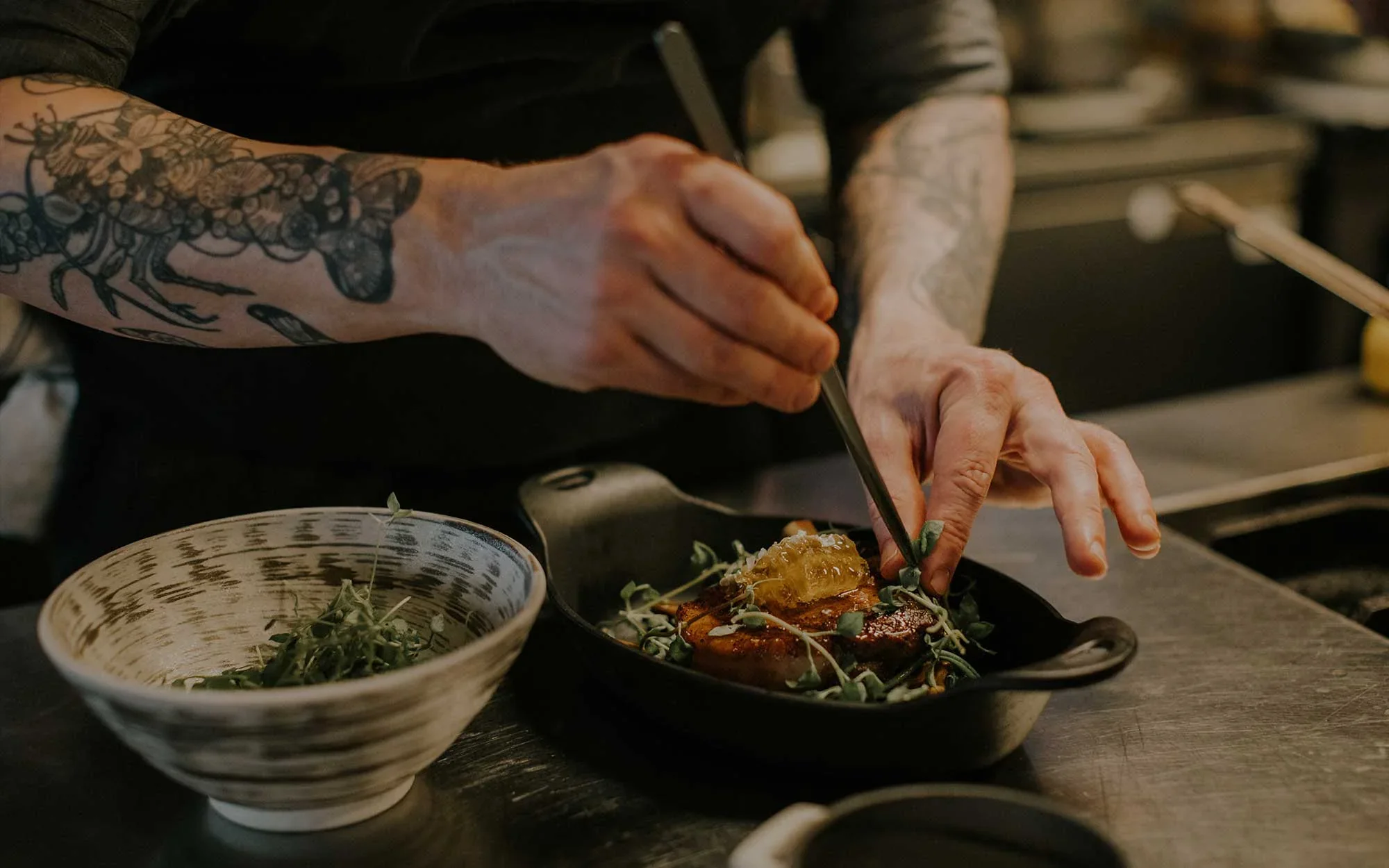
When I was a young chef, back when Vinland in Portland was still around, that reality became clear to me fast. It was a place that attracted a certain kind of crowd. If you’re from this industry, you know what I mean. During the interview, the executive chef and owner told me that his cooks had to embody the restaurant inside and outside of work. Eating holistically, living intentionally, believing in the philosophy as much as the food. Meanwhile, I was standing there with a can of Red Bull, a Snickers bar, and a pack of smokes in my bag, wondering what I’d gotten myself into.
I didn’t think I’d last long. On the surface, everyone looked the same and seemed to easily be slotted into a 'category' of beliefs. Tattoos, shaved sides of the head, denim aprons, strong opinions about everything. But it didn’t take long to realize that while people held opinions strongly, they also held them with some level of flexibility and openness. Prep time became a place for real conversation. People talked through both sides of issues without fear of being shunned or shut down.
And then service would start. At that point, nobody gave a damn who believed what. You were either flying together, crushing it, or you were all in the weeds. That sea bass didn’t care who was on a ballot or what the trending topic of the week was. It just needed to be cooked properly and not dried out. We got the job done together.
I bring this up because, in my experience, that’s how kitchens have always worked. Until recently.

Seeing people as human beings, with different opinions, backgrounds, and stories, has been reframed as something to argue over. What used to be taboo topics that can be openly discussed has turned into questions of right versus wrong, loyalty versus defiance. And choosing a side has now turned into real consequences, especially in an industry that has always relied on people quietly holding things together.
Lately, we’ve watched restaurants and businesses close their doors as acts of solidarity against ICE. We’ve seen owners defend their positions loudly, even in the face of backlash. Customers are now choosing where to spend money based purely on aligned beliefs, and very few people seem willing to soften their stance or leave room for common ground.
For decades, kitchens have been filled with people whose lives don’t fit neatly into boxes. Documented and undocumented. Paid on the books and under the table. People whose cultural background is inseparable from the food they cook. People with criminal records. People trying to rebuild quietly without drawing attention to themselves. It was how restaurants stayed open and how people found work when few other doors were open. If you could cook, show up, and get through service without blowing up the room, you belonged. End of story.
Most guests never knew who was behind the kitchen door, and for a long time, that was the point. Restaurants worked because the focus stayed on the food, the service, and the team. Background stayed in the background. Humanity stayed intact. What’s shifted now is the amount of fear people are carrying into work. And fear doesn’t clock out.

You feel it in quieter kitchens. In people keeping their heads down. In coworkers disappearing without explanation. In teams trying to operate as if nothing has changed, while everything underneath feels unstable. Anyone who’s spent time in this industry knows when the energy is off, even if no one says a word.
Hospitality already asks a lot. Long hours, physical exhaustion, and emotional steadiness. Being on, no matter what’s happening outside those walls. When someone is also carrying fear about their safety, their family, or their future, the weight compounds quickly. Targeted and questioned simply because they don’t look like they fit in. When people no longer feel safe, seen, or protected, even informally, the foundation starts to crack. Quietly. One missing shift, one empty station at a time.
This isn’t about choosing sides. It’s about remembering what hospitality has always been. A place where work created belonging and where people who didn’t always feel welcome elsewhere found community through shared purpose.
A kitchen at its best doesn’t ask for allegiance. It asks for respect, accountability, and care, given and returned. If we lose sight of that, we don’t just lose people. We lose the thing that made this industry worth staying in, even when it was brutal. A wedge has been driven deeper into society, and an “us versus them” mentality has emerged. That shouldn’t bleed over into our industry — we’re here to serve everyone.
The line never asked for papers. It asked if you were ready when the tickets started printing.